Quick Summary
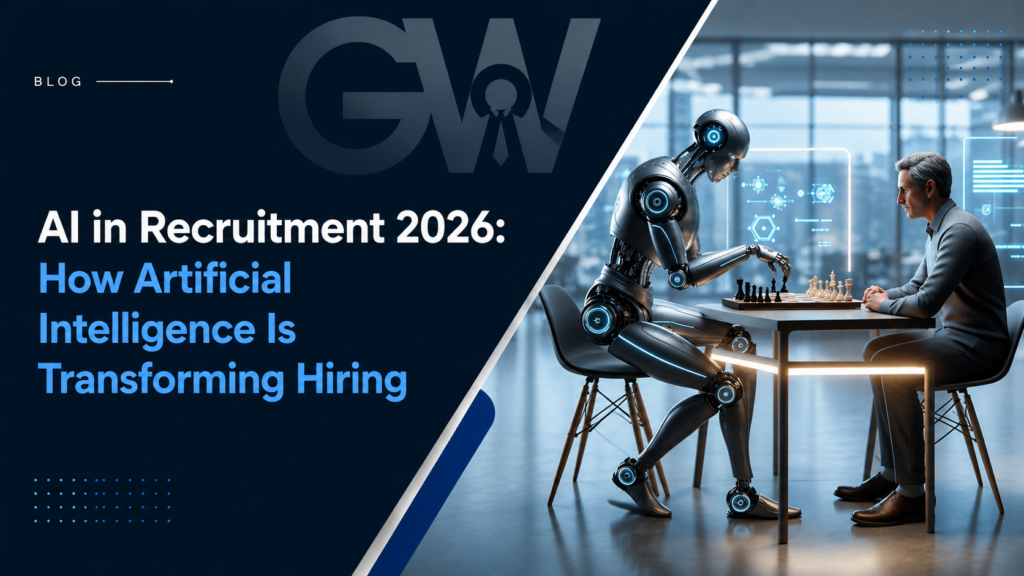
AI is no longer an emerging trend in recruitment. In 2026, organizations across industries are using artificial intelligence to source candidates, screen resumes, schedule interviews, and improve hiring efficiency. As talent shortages continue to grow, AI helps recruiters save time, reduce hiring costs, and make better hiring decisions while keeping the human touch at the center of recruitment.
However, the reason the use of this technology has become popular is not novelty but necessity, as firms face talent shortages, high cost per hire, and labour markets where the best candidates vanish within days.
While there are benefits for those who make sure that AI in recruitment 2026 works hand-in-hand with governance and oversight, others have only been adding noise by using AI as a quick-fix solution.
Why AI in Recruitment 2026 Is Reshaping Talent Acquisition
Recruitment in 2026 looks very different from just a few years ago. Recruiters are managing more applications with limited budgets while competing for top talent in an increasingly competitive job market, and a pool of applicants who are increasingly using generative AI technology to apply to multiple positions during a single afternoon. And then there’s the issue of skill shortages in technology, healthcare, and financial services, which have been around for some time but have only become more expensive to address.
This is the context against which we need to understand the sudden and dramatic rise of AI Recruitment. AI adoption has exploded, as industry surveys show that about half of companies or more are already using artificial intelligence in their recruitment efforts (as opposed to a small fraction just a few years back), with the vast majority of recruiters indicating that they intend to make even greater use of AI going forward.
In its study of talent acquisition trends for 2026, Gartner highlights generative AI, interview intelligence, and AI-based recruiters as the technologies with the greatest potential impact on the future of the recruiting process.
According to Deloitte’s 2026 Global Human Capital Trends survey, more than 9,000 business and HR leaders participated in the research. Most C-suite executives believe their talent functions need fundamental changes. However, only a small percentage feel they have successfully made those changes.
What Is AI in Recruitment 2026?
The term “AI recruitment” is used to refer to the use of machine learning, generative AI, and intelligent automation in the entire recruitment process from candidate sourcing to scheduling interviews, communication, and even workforce planning. The concept does not intend to replace recruiters; it seeks to automate repetitive and voluminous processes for recruiters.
Why AI Is Transforming Recruitment in 2026
The argument behind AI-powered recruitment rests on five practical changes:
- Faster recruitment: automated resume screening and scheduling reduce the number of manual steps associated with the process.
- Better matching of candidates: pattern-matching of skills and experience allows finding qualified candidates that cannot be reached through simple keyword filters.
- Greater efficiency of recruiters: recruiters using AI-related software report saving a significant amount of time each day, allowing them to spend it on recruiting and hiring tasks.
- Better candidate experience: prompt replies and updates solve the problem of silence, often mentioned by job seekers as their greatest frustration regarding recruiting.
- Making informed decisions: predictive analysis provides talent acquisition professionals with information about the future needs for hiring in advance.
None of the above occurs automatically. According to research from SHRM on the adoption of AI in HR, recruiting is the only common use case of AI in HR processes, which explains its importance for the overall quality of hiring.
Key Areas Where AI Is Changing Hiring
AI-Powered Candidate Sourcing
These AI-based sourcing technologies will search for potential candidates in the organization’s database, on job portals, and through professional networking sites that meet the requisites for the position, even those individuals who are not actively seeking employment.
Automated Resume Screening
One of the most frequently applied applications of artificial intelligence in recruiting is resume screening, which is employed by many companies for conducting preliminary assessments. The advantage of this approach lies in its fast nature; tasks that were previously accomplished within several hours now only require a couple of minutes to be done.
Predictive Hiring Analytics
Predictive models leverage data on previous recruiting, pipeline velocity, and seasonality trends in order to determine the direction in which the demand for new hires will go, thus allowing recruiting professionals to create pipelines before a job comes into existence.
AI Interview Assistants
These tools provide the capabilities to schedule interviews, transcribe them, and do structured analysis of the interview discussions. Candidates have divergent views regarding this. Many feel that it is fine to have an AI tool in assisting during the logistics part of the process, but ultimately, they need a human being to make the decision.
Benefits of AI-Powered Recruitment
1. Reduced Time-to-Hire
- Problem: The manual screening and scheduling process causes delays in each phase of the funnel, while the best candidates opt for other job offers before catching up.
- Solution: Automated screening and candidate self-scheduling get rid of the back-and-forth that takes many days from the calendar.
- Example: For an IT company that screens several candidates for one position, this is the difference between taking several days and doing this within one day.
- Result: Quicker shortlisting, fewer candidates getting away to your slower competitors, and an improved hiring cycle overall.
2. Improved Quality of Hire
- Problem: Filtering based on key terms is not effective in identifying suitable candidates who do not include certain wording on their CVs.
- Solution: The AI skills-matching technology allows for assessment of candidates based on the competencies that the job entails rather than the terms on a resume.
- Example: A hospital system switching from the criteria-based screening to the competency-based one can increase its pool of candidates without compromising on quality standards.
- Impact: Employers relying on AI recruitment software indicate improvements in quality of hire, according to SHRM studies.
3. Lower Recruitment Costs
- Problem: Manual sourcing and screening of high quantities take up a significant number of recruiter hours, which do not scale efficiently as the requirement for hiring increases.
- Solution: Automated sourcing and screening help in reducing costs per hire without increasing manpower.
- Example: A staffing agency dealing with mass recruitment for either seasonal jobs or front-line staff can handle much greater numbers of applicants using the same set of recruiters.
- Result: Cost-per-hire reduction and scalability of the recruiting team as per requirements.
4. Enhanced Candidate Experience
- Problem: Candidates regularly experience not being kept in the loop even after submitting an application, hurting employer branding even when the candidates are not hired.
- Solution: Status notifications through automation and conversation via artificial intelligence keep the candidate updated throughout the process.
- Example: An IT firm that makes use of artificial intelligence technology in its messaging process when doing bulk hiring.
- Outcome: Candidates have more satisfaction with their communication process with the company, even though they don’t trust the AI for making decisions.
5. Better Hiring Decisions
- Problem: Time-bound recruitment processes are more likely to suffer from inconsistencies and biases.
- Solution: Structure and human input through artificial intelligence lead to more consistency in the decision-making process.
- Illustration: A large company employing an artificial intelligence tool for shortlisting alongside structured interviews and recruiter evaluation.
- Result: Consistent recruitment decisions and documentation in view of increasing regulation of hiring.
Data and Industry Insights
The shift from traditional to AI-assisted recruitment is most visible in how routine hiring tasks are handled:
| Recruitment Activity | Traditional Hiring | AI-Powered Hiring |
| Resume Screening | Hours per batch | Minutes per batch |
| Candidate Matching | Manual keyword search | Automated skills matching |
| Scheduling | Manual back-and-forth | Self-service automation |
| Hiring Analytics | Limited, retrospective | Real-time, predictive |
| Candidate Engagement | Reactive, recruiter-dependent | Personalized, always-on |
Recruitment is already the most common application area for artificial intelligence within the sphere of HR operations, while resume screening has already become ubiquitous amongst employers who have incorporated AI into their hiring processes, as shown by recently conducted industry surveys. On the other hand, the level of candidate confidence still doesn’t keep up with the speed of implementation, since research shows that the vast majority of candidates still prefer to have an actual person decide on who will be hired, even though they trust AI to handle other stages of the process.
AI Recruitment Workflow in 2026
A modern, AI-supported hiring workflow typically follows this sequence:
Workforce Planning
- AI Talent Mapping
- Automated Candidate Sourcing
- Resume Screening
- AI Candidate Ranking
- Interview Scheduling
- Recruiter Evaluation
- Offer Management
- Onboarding
Note the position of “Recruiter Evaluation” in this sequence – it sits deliberately after AI ranking and before any offer is made, ensuring human judgment remains the final checkpoint.
AI Recruitment Trends Shaping 2026
1. Generative AI for Recruiting
Generative AI now drafts job descriptions, candidate outreach, and interview summaries, reducing the writing burden on recruiters while keeping messaging consistent.
2. Skills-Based Hiring
More employers are screening for demonstrated skills rather than degrees or job titles, widening the talent pool for roles where credentials don’t predict performance.
3. Talent Intelligence Platforms
Unified platforms now combine sourcing, skills data, and workforce analytics, giving talent acquisition leaders a single view of supply and demand across the organization.
4. Conversational AI Recruiters
Chat-based assistants now handle a growing share of candidate FAQs and early screening conversations, particularly for high-volume frontline and entry-level roles.
5. Ethical and Responsible AI Hiring
Regulation is catching up to adoption. Frameworks like the EU AI Act classify hiring-related AI as high-risk, and jurisdictions such as New York City require bias audits and candidate notices for automated employment decision tools. Responsible AI hiring in 2026 means documented oversight, not just deployed software.
Challenges of Using AI in Recruitment
While AI is transforming recruitment, it also comes with challenges that organizations must address to ensure fair and effective hiring.
AI systems learn from historical hiring data. If that data contains bias, AI may unintentionally favor or reject certain candidates. Regular audits and human oversight are essential to reduce bias.
Data Privacy
AI recruitment tools process large amounts of candidate data. Organizations must comply with privacy regulations and ensure candidate information is stored and handled securely.
Lack of Human Judgment
AI can analyze resumes and identify patterns, but it cannot assess qualities like cultural fit, emotional intelligence, or long-term potential. Final hiring decisions should always involve experienced recruiters.
While AI can automate repetitive hiring tasks, businesses still need experienced recruiters for strategic hiring decisions. Learn how to choose the right RPO partner to balance technology with human expertise.
Compliance and Regulations
Many countries have introduced regulations governing the use of AI in hiring. Companies should ensure their AI tools meet legal requirements related to transparency, fairness, and candidate rights.
Over-Automation
Relying too heavily on automation can make the hiring process feel impersonal. A balanced approach that combines AI efficiency with human interaction creates a better candidate experience.
Why Businesses Choose Get Workz
Our Expertise
Experienced Recruiters
AI-Assisted Hiring
Healthcare Recruitment
IT Recruitment
Our Hiring Solutions
Executive Search
RPO Services
Faster Time-to-Hire
Conclusion
AI recruiting technology cannot be regarded as a new trend because it has become an integral element of the process of attracting, evaluating, and selecting employees by modern organizations. Thanks to such innovations as candidate and resume screening, predictive analytics, and workforce planning, artificial intelligence helps companies accelerate and optimize the process of decision-making during hiring.
Nevertheless, the effective implementation of this technology does not imply the substitution of recruiters by algorithms. The companies that reap the most benefits from artificial intelligence in recruiting use this tool in conjunction with human skills, managerial competencies, and candidate experience.
With the development of AI recruiting trends, those who manage to achieve a perfect combination of human and technological factors will have a better chance of attracting candidates, cutting costs, and remaining competitive on the labour market.
The future of recruitment with AI belongs to those companies that regard technology as a means of enhancing hiring, rather than substituting humans in this process.
Ready to Build a Smarter Hiring Strategy with AI?
With AI in Recruitment 2026 changing the game of talent acquisition, companies do not only require technology but also a strategic approach to recruitment.
Get Workz enables firms to integrate their AI in recruitment technologies along with expert talent acquisition knowledge to form faster, scalable, and outcome-oriented hiring practices.
If you are searching for Recruitment Process Outsourcing (RPO), Executive Search, IT Recruitment, Healthcare Staffing, Bulk Hiring, or any other kind of workforce planning, Get Workz is here to assist you through the future of recruitment.
Reach out to Get Workz to learn more about how our AI-driven hiring solutions can improve your company’s recruitment process.
FAQs About AI in Recruitment 2026
1. How is AI transforming recruitment in 2026?
AI is making sourcing, screening, scheduling, and communication with candidates more automated, thus reducing and allowing recruiters to concentrate on decision-oriented jobs such as relationship management and decision-making.
2. Can AI replace recruiters in the hiring process?
No. AI performs best at repetitive tasks in repetitive workloads. But when it comes to building relationships, negotiating, creating an attractive employer brand, and making the ultimate decision on whom to hire, a human touch is necessary. Candidates also prefer this approach.
3. How does Get Workz use AI in Recruitment 2026 to improve hiring outcomes?
Get Workz uses the combination of recruitment technology driven by artificial intelligence and human expertise to optimize candidate sourcing, screening, engagement, and workforce planning. The combination of automation of routine work by AI and making decisions through the use of recruiters’ knowledge will help companies save time and hire high-quality candidates.
4. What is the future of recruitment with AI?
Anticipate greater alignment between skills-based recruitment, predictive workforce planning, and regulatory oversight concerning discrimination and transparency issues, where the use of AI becomes a norm within recruitment practices, not just an experimental tool.