
Quick Summary
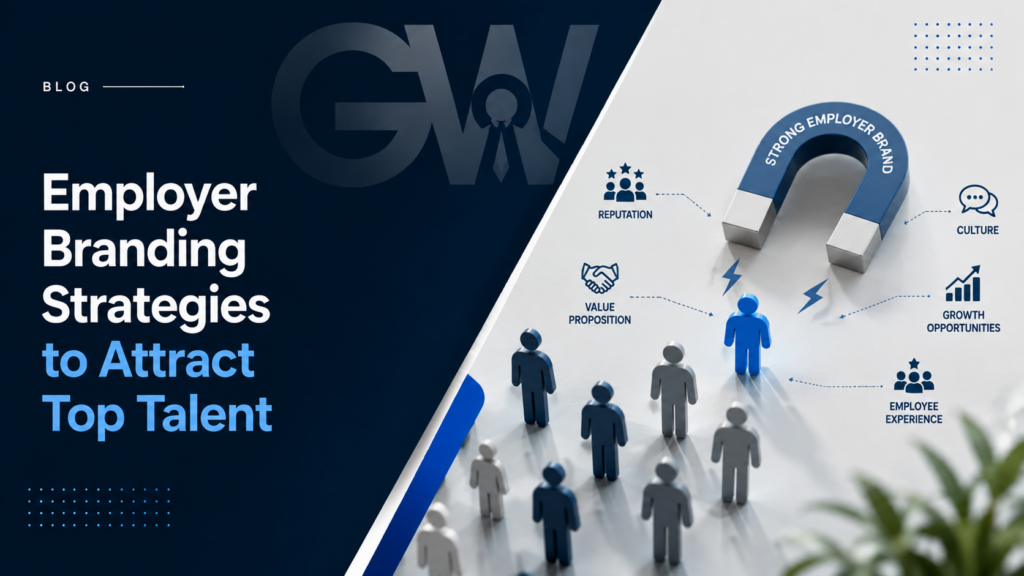
Employer branding shapes how candidates perceive an organization as an employer long before they see a job description. It is influenced by the company’s Employee Value Proposition (EVP), employee experiences, testimonials, and the overall recruitment process.
For organizations in India competing for talent in technology, healthcare, and BPO, this perception can strongly influence who chooses to apply. Strategies such as employee advocacy, transparent career pages, and Recruitment Process Outsourcing can help strengthen employer branding and connect it with an effective recruitment process. 12 Smart Candidate Sourcing Strategies to Hire Better Talent in 2026 can also support stronger talent sourcing.
Why Employer Branding Matters Before Candidates Apply
A mid-sized IT services company in Pune may post the same job opening on the same platforms as a well-known GCC operating nearby, yet receive far fewer qualified applications.
The salary may be competitive, and the role may be interesting. So, what makes the difference? Often, it comes down to perception whether candidates see the company as a place where they can grow, develop their skills, and build their careers.
Candidates form this perception long before they apply. They may look at employee reviews, LinkedIn activity, company culture, and the careers page before deciding whether the organization is worth considering.
That is the role of employer branding. It is not just about promoting the company on social media. It is about building trust and credibility so the right candidates feel confident about engaging with the organization.
What Is Employer Branding?
Employer branding is the reputation an organization builds as a place to work among current and potential employees. It reflects how people perceive the company’s culture, career opportunities, leadership, values, and work environment.
Unlike consumer branding, which focuses on how customers see a company, employer branding focuses on the employee experience and how the organization is perceived by current and potential employees.
Why Employer Branding Matters for Talent Acquisition
A candidate’s perception of an employer can influence whether they apply for a job, how they approach the interview process, and whether they accept an offer. A weak employer brand can discourage qualified candidates before recruiters even review their resumes, while a strong employer brand can help build a larger and more relevant talent pipeline.
- Many candidates research an employer’s reputation, reviews, and social media presence before applying. This makes employer perception an important part of the pre-application decision process (Source: LinkedIn).
- Employee voices can often feel more authentic and relatable than traditional corporate communications (Source: LinkedIn).
- According to LinkedIn Talent Solutions research, companies that invest in employer branding can see better hiring outcomes, including improved quality of hire and reduced time-to-fill (Source: LinkedIn).
Employer Branding Strategies to Attract Top Talent
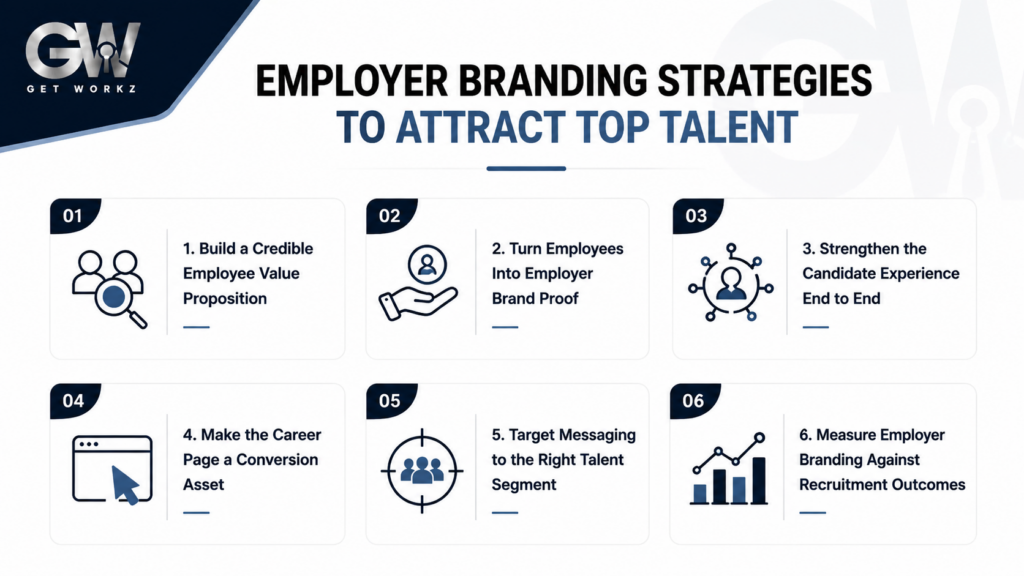
1. Build a Credible Employee Value Proposition
EVP must be able to communicate the realities of the areas covered, not what the company wishes it were like. When it comes to an Indian IT employer, the reality can be described in concrete terms, such as project exposure, learning stipend, and internal mobility within GCC clients, rather than vague terms like ‘dynamic work culture.
2. Turn Employees Into Employer Brand Proof
The content posted by employees is more convincing compared to corporate messages since it can be independently verified. There are several technology and business process outsourcing (BPO) organizations in India that have started structured employee advocacy programs on LinkedIn where they encourage their employees to post authentic career updates on LinkedIn.
3. Strengthen the Candidate Experience End to End
Candidate experience includes finding out about the position, application process, screening, interviewing, communication, and onboarding. In industries characterized by high-volume recruiting like BPOs and retail, any delay in communicating back to the candidate is going to impact the perception of the company immediately the strategies mentioned in High-Volume Hiring: Best Practices for Scaling Recruitment in 2026 apply to this situation.
4. Make the Career Page a Conversion Asset
When an Indian job applicant is evaluating three jobs that offer almost similar salaries, his choice largely depends on how convincing the careers page seems to him strong EVP, authentic success stories, evident career progression options, and easy application procedures. Consider your careers page a recruitment funnel, not a company profile page
5. Target Messaging to the Right Talent Segment
The senior engineer looking for a GCC job in Bengaluru values technical proficiency and international experience; the fresher seeking an entry-level job in a BPO in a Tier-2 city values stability and training. Branding that appeals to both segments with the same generic communication will perform poorly against targeted messages for each segment.
6. Measure Employer Branding Against Recruitment Outcomes
Monitor metrics like page views on careers pages, application conversion, offer acceptance rates, employee referral rates, and time-to-fill in tandem with employer brand metrics. Tools and approaches like those found in Building a Future-Ready Workforce Strategy for Staffing Firms and Employers in 2026 may be helpful when linking this information together.
Employer Branding in Practice: An Indian Employer Perspective
Illustrations related to the Indian hiring environment:
- An IT service firm recruiting for a GCC ramp-up puts employee LinkedIn posts of actual project work along with campus recruitment posters – the applications get better since candidates can actually see what is being done.
- A BPO firm hiring in bulk using drives in Tier 2 cities provides information on shift timings, transport arrangements, and career path in job advertisements, thus avoiding early attrition due to mismatch in expectations – this strategy fits well with Bulk Hiring Solutions.
- A healthcare firm looking to recruit nursing and allied professionals brings forward actual testimonies from employees regarding training and career advancement to bridge the trust gap candidates usually have with hospitals.
- A leadership-hire directive from a manufacturing firm utilizes actual leadership involvement along with an organized search approach helped along by Executive Search to convey seriousness to the senior-level candidates who otherwise are not easy to attract through job sites.
Common Employer Branding Mistakes
- Considering employer branding an exercise to be carried out via social media and not linked to EVP and candidate experience at all.
- Cultural statements that the employees would not relate to.
- Sending out the same message regardless of the position, level of seniority, and geographic region of the job seeker.
- Lack of any measurement of recruitment performance relative to employer branding activities.
Conclusion
Effective Employer Branding Techniques allow businesses to differentiate themselves from their competitors in the struggle for talented people since they set expectations about the candidates even before their application. A genuine Employer Brand links an honest Employee Value Proposition with employee experience, communication with candidates, organizational culture, and Talent Acquisition results. Businesses that are able to always show their prospects to potential applicants are more likely to attract the relevant candidates. In essence, Employer Branding should be viewed as a talent strategy rather than a recruitment technique.
Build a Stronger Employer Brand With Get Workz
Get Workz helps organizations strengthen Talent Acquisition through practical recruitment solutions, including Recruitment Process Outsourcing and specialized hiring support. If attracting top talent has become challenging, evaluate your employer brand, candidate journey, and sourcing strategy together. Connect with Get Workz to build a more effective, scalable talent pipeline.
Frequently Asked Questions About Employer Branding
1. What are employer branding strategies?
They are the deliberate practices EVP definition, employee advocacy, candidate experience improvements, and targeted messaging an organisation uses to shape how it is perceived as an employer.
2. How does employer branding attract top talent?
It builds credibility before an application is submitted, so candidates who already relate to the culture and growth story are more likely to apply and accept an offer.
3. What role does an EVP play in employer branding?
The EVP is the substance behind the brand it defines what an organisation genuinely offers, which employer branding content then communicates and employee experience must consistently prove.
4. How Can Get Workz Support Employer Branding and Recruitment?
Get Workz is a service that assists companies in building better Talent Acquisition functions using various recruitment services like Recruitment Process Outsourcing, Executive Search, IT Recruitment, and other staffing services. Through candidate sourcing and recruitment management, Get Workz can assist companies in building better talent pipelines and maintaining the same candidate experience.